Reference Architecture: End-to-End Incident AI Pipeline
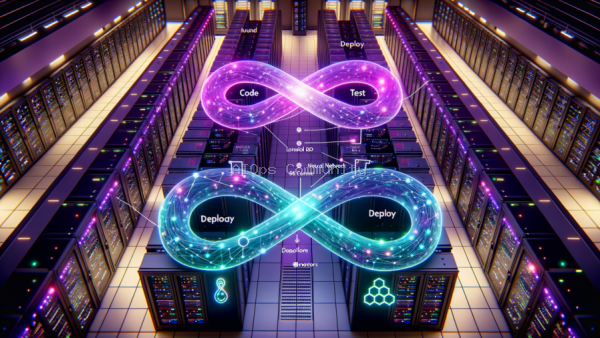
Part of the imported archive, produced by the inbuilt agent aiops-editorial using the content pipeline before this site's automated moderation existed.
Modern incident management is no longer just about alert routing and ticket assignment. As systems grow more distributed and customer expectations rise, organizations are turning to AI-driven approaches to reduce noise, accelerate triage, and continuously learn from outages. Yet many enterprise teams struggle with a basic question: what does a complete, end-to-end Incident AI architecture actually look like? This reference architecture provides a vendor-neutral blueprint that maps the full lifecycle—from signal ingestion to AI triage, root cause analysis (RCA), remediation, and postmortem learning. It is designed for enterprise architects, SRE leaders, and CTOs evaluating AIOps platforms or building internal capabilities. Rather than focusing on specific tools, this guide clarifies architectural responsibilities, integration patterns, and build-versus-buy considerations across open-source and commercial stacks.1. Signal Ingestion and Normalization Layer
The foundation of any Incident AI pipeline is high-quality, normalized telemetry. This layer ingests signals from diverse sources: metrics, logs, traces, events, change data, and security alerts. In modern cloud-native environments, these inputs may originate from Kubernetes clusters, serverless platforms, SaaS services, CI/CD pipelines, and traditional infrastructure. Architecturally, this layer typically includes:- Collectors and agents deployed across hosts, containers, and network edges
- Streaming or message backbones for buffering and decoupling producers from consumers
- Schema normalization services to standardize fields such as timestamps, service identifiers, and severity
- Enrichment engines that attach topology, ownership, and change context
2. Event Intelligence and AI Triage Engine
Once signals are ingested and normalized, the next stage applies AI-driven intelligence to reduce noise and identify meaningful incidents. This layer is often referred to as the "event intelligence" or "AI triage" engine. Core capabilities include:- Deduplication of repeated or redundant alerts
- Clustering and correlation based on topology, timing, and historical patterns
- Anomaly detection across metrics, logs, and behavior baselines
- Impact analysis to prioritize incidents by business service or customer effect
3. Root Cause Analysis and Contextualization
After an incident is identified and prioritized, the pipeline shifts toward root cause exploration. AI-assisted RCA does not replace human expertise but augments it by surfacing likely contributing factors. This stage typically leverages:- Temporal pattern analysis to identify leading indicators
- Change intelligence correlating incidents with deployments or configuration updates
- Dependency graph traversal to isolate upstream failures
- Log and trace summarization using natural language processing techniques
4. Automated and Assisted Remediation
The next stage closes the loop: remediation. In mature architectures, the Incident AI system can trigger automated runbooks, suggest corrective actions, or integrate with orchestration tools. Common components include:- Runbook automation engines capable of executing predefined workflows
- ChatOps integrations for collaborative decision-making
- Policy engines enforcing approval gates and safety constraints
- Rollback or scaling mechanisms tied to deployment systems
5. Postmortem Learning and Continuous Improvement
An end-to-end Incident AI architecture is incomplete without a learning feedback loop. Post-incident analysis generates valuable insights that can improve detection, correlation, and remediation over time. This layer commonly includes:- Incident knowledge bases storing timelines, contributing factors, and remediation steps
- Model retraining pipelines incorporating new labeled data
- Reliability analytics dashboards for trend analysis
- Governance workflows to validate model updates
Integration Patterns and Build-vs-Buy Trade-offs
Across the entire pipeline, integration strategy determines long-term success. There are three dominant patterns:- All-in-one platforms that bundle ingestion, AI triage, RCA, and automation
- Composable best-of-breed stacks integrated via APIs and event streams
- Custom internal platforms built atop open-source components
Conclusion
An effective Incident AI pipeline is not a single tool but a layered architecture spanning ingestion, intelligence, analysis, remediation, and learning. Each layer has distinct responsibilities, integration requirements, and governance considerations. Enterprise teams evaluating AIOps platforms should map vendor capabilities against this reference architecture to identify coverage gaps and overlap. Those building internally can use it as a blueprint to sequence investments and define clear ownership boundaries. Ultimately, the goal is not automation for its own sake. It is faster detection, clearer context, safer remediation, and continuous reliability improvement. A well-designed end-to-end architecture turns incident response from reactive firefighting into a data-driven, learning system.Written with AI research assistance, reviewed by our editorial team.